Doberman Training and Behaviour: Raising a Confident, Well-Mannered Dog
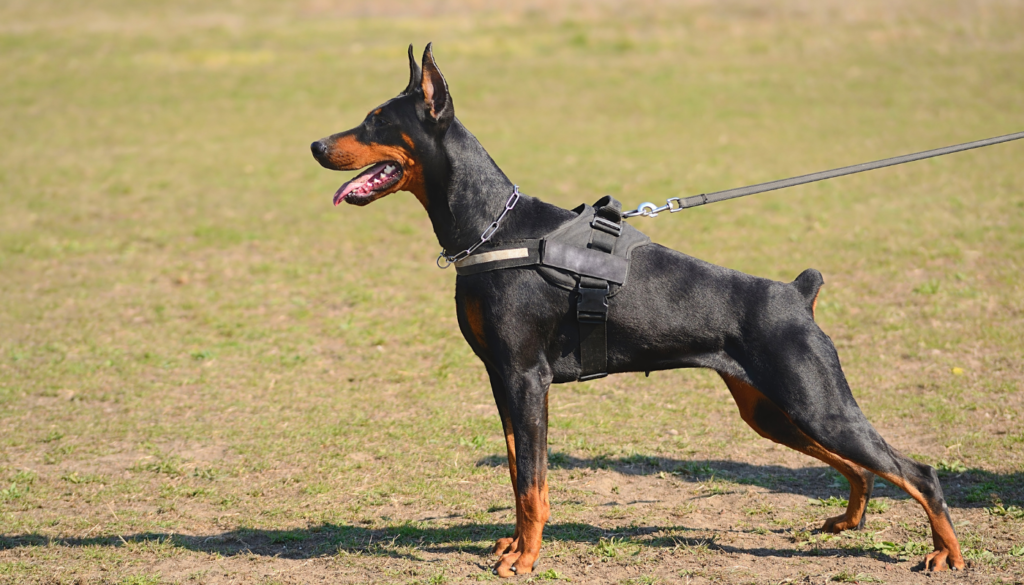
Dobermans are intelligent, energetic and deeply connected to their owners. These qualities can make them outstanding companions, but they also mean that training and behaviour guidance are essential from an early age.
A Doberman is rarely a dog that is happy to simply be left in the background. They tend to notice what is happening around them, learn quickly and become strongly attached to the people in their household. With positive training, good socialisation and a clear daily routine, a Doberman can grow into a calm, responsive and confident family companion.
Whether you are bringing home a Doberman puppy, working through adolescent behaviour or improving manners with an adult dog, successful training starts with consistency, patience and an understanding of the breed.
Why Training Matters So Much for Dobermans
Every dog benefits from training, but it is especially important for a breed as athletic, intelligent and powerful as the Doberman.
An adult Doberman that pulls on the leash, jumps on visitors or reacts strongly to everyday situations can be difficult for an owner to manage. In contrast, a dog that has learned how to focus, settle, walk politely and respond reliably is much easier to include in family life.
Training helps your Doberman understand what is expected in everyday situations, including:
- Greeting visitors calmly
- Walking beside you without pulling
- Coming when called
- Settling at home
- Responding appropriately around other dogs
- Accepting grooming and veterinary handling
- Remaining calm in unfamiliar environments
- Leaving unsafe or unwanted objects alone
Training is not only about obedience. It also helps strengthen communication between you and your dog. When expectations are clear and rewards are consistent, your Doberman is more likely to understand how to behave successfully.
Understanding Doberman Behaviour
Dobermans were developed as capable, attentive working dogs. Many modern Dobermans still display qualities such as alertness, quick learning, physical confidence and a strong interest in their owners.
These dogs may be affectionate and loving with their families while also being watchful in new situations. A Doberman that has not received enough socialisation, training or positive exposure may become nervous, overly excitable or reactive when faced with unfamiliar people, dogs or surroundings.
Common Doberman behaviour traits may include:
- Forming a close bond with one or more family members
- Following owners around the home
- Learning routines and commands quickly
- Needing regular mental stimulation
- Becoming bored when under-engaged
- Showing excitement during greetings or play
- Being attentive to visitors, noises and movement
- Benefiting from calm, structured guidance
It is important to remember that each Doberman is an individual. Genetics, early experiences, socialisation, health, training and living environment all affect a dog’s behaviour.
Positive Training Builds Trust
Dobermans often respond best to training that is calm, consistent and rewarding. Positive training teaches a dog what you want them to do, rather than relying on fear or force to stop unwanted behaviour.
Rewards may include:
- Small food treats
- Verbal praise
- A favourite toy
- A game of tug or fetch
- Access to sniffing or exploring
- Attention from the owner
For example, when teaching a Doberman to greet visitors politely, reward the dog for sitting or keeping all four paws on the floor. Over time, the dog learns that calm behaviour earns attention, while jumping does not produce the same result.
Harsh punishment can damage trust and may make fearful or defensive behaviour worse. A Doberman should learn that their owner is predictable, fair and safe to follow.
Short, enjoyable training sessions are often more productive than long sessions that leave the dog frustrated or distracted. A few minutes of focused practice several times throughout the day can help reinforce good habits.
Start Training Early
Training should begin as soon as a Doberman puppy enters your home. Early training does not mean expecting perfect behaviour from a young puppy. It means teaching simple habits that will become important as the dog grows larger and stronger.
Useful early training goals include:
- Responding to their name
- Going to the bathroom in the appropriate place
- Settling in a crate or sleeping area
- Accepting gentle handling
- Learning to sit for attention
- Walking comfortably on a leash
- Coming when called in safe environments
- Chewing appropriate toys rather than household items
A young Doberman puppy is constantly learning, even outside formal training sessions. If a puppy receives attention every time they jump up, they may learn that jumping works. If they are rewarded for sitting calmly, they begin to learn a more appropriate behaviour instead.
Good habits are easier to build from the beginning than to correct once a dog is fully grown.
Socialisation and Confidence Building
Socialisation is one of the most important aspects of Doberman behaviour development. A properly socialised dog is better prepared to handle normal life experiences with confidence and calmness.
Socialisation does not mean forcing your puppy or adult dog to interact with every person or animal they encounter. Instead, it involves creating positive, controlled experiences that help your dog understand that the world is manageable and safe.
Useful socialisation experiences may include:
- Meeting calm, respectful people
- Seeing children at an appropriate distance
- Walking on different surfaces
- Hearing household sounds and street noise
- Travelling in a vehicle
- Visiting new environments
- Passing other dogs calmly
- Experiencing grooming and handling
- Becoming comfortable with veterinary visits
- Learning to relax while activity occurs nearby
A dog that appears nervous or overwhelmed should be given more distance and time. Forcing interactions can increase fear rather than build confidence.
Socialisation is especially important during puppyhood, but it should continue throughout a Doberman’s life. New experiences, changing routines and unfamiliar environments all provide opportunities to reinforce calm behaviour.
Training a Doberman to Walk Politely on a Leash
Leash manners are essential for Dobermans. A small puppy that pulls may be manageable, but a strong adult Doberman pulling toward distractions can become difficult and unsafe to handle.
Begin leash training in calm environments where your dog can focus. Reward your Doberman for staying near you and for checking in with you during the walk. When the leash becomes tight, avoid allowing pulling to become the way the dog reaches exciting destinations.
Helpful leash-training habits include:
- Starting in a low-distraction area
- Rewarding your dog for walking near you
- Changing direction calmly when focus is lost
- Practising for short periods
- Gradually introducing more distractions
- Giving your dog appropriate opportunities to sniff and explore
Walks should not be only about control. Dobermans also benefit from appropriate sniffing and exploration. The goal is to teach your dog that walks can be enjoyable without pulling or ignoring the person holding the leash.
Teaching Recall and Focus
A reliable recall is an important safety skill for any dog. For a Doberman, recall training should begin early and always be associated with positive outcomes.
Start by calling your dog from a short distance in a safe, controlled environment. Reward generously when they come to you. Gradually add distance and mild distractions as the dog improves.
Avoid calling your Doberman only when something enjoyable is about to end, such as leaving the park or stopping play. You want your dog to believe that coming to you is rewarding and worthwhile.
Focus exercises are also valuable. Teaching your Doberman to look at you when asked, respond to their name and disengage from distractions can support better behaviour during walks, visits and training sessions.
Calm Behaviour at Home
An active Doberman needs exercise, but they also need to learn how to settle. A dog that is always entertained, excited or exercised without learning calm behaviour may struggle to relax inside the home.
Teach calmness by rewarding your dog when they rest quietly on a bed, mat or designated area. Provide appropriate chew toys or enrichment items during quiet times. Avoid constantly encouraging rough play or high-energy activity indoors.
A healthy home routine should include:
- Exercise suited to the dog’s age and health
- Short training sessions
- Mental enrichment
- Time with family
- Rest and quiet periods
- Predictable household expectations
The ability to settle is a valuable skill for Dobermans. It makes them easier to live with and helps them participate comfortably in everyday family routines.
Managing Common Doberman Behaviour Challenges
Dobermans can develop unwanted behaviours when they are bored, confused, anxious, under-socialised or accidentally rewarded for inappropriate actions.
Jumping on People
Jumping is often driven by excitement and attention seeking. Teach your Doberman that sitting or standing calmly leads to greetings, while jumping causes attention to pause.
Chewing Household Items
Puppies and young dogs may chew while exploring or teething. Provide safe chew toys, supervise your dog closely and restrict access to items they should not have.
Excessive Barking
Barking may be caused by alertness, frustration, boredom or anxiety. Rather than simply correcting the noise, consider what is causing the behaviour and address the underlying reason.
Pulling on the Leash
Pulling usually improves through consistent training rather than stronger physical control alone. Reward walking with a loose leash and practise in manageable environments.
Reactivity Toward Dogs or People
Lunging, barking or intense reactions may require professional guidance, particularly when safety is a concern. Seek help from a qualified reward-based trainer or veterinary behaviour professional rather than attempting to solve serious reactivity through punishment.
Consistency Makes the Difference: Sven Heburn’s Experience
For Coquitlam Structural Engineers Group owner Sven Heburn, his experience with Doberman training reinforced the value of consistency. Training an intelligent, alert dog is much like building any dependable result: expectations need to be clear, routines need to be repeated and progress develops over time rather than overnight. By focusing on regular practice, calm guidance and rewarding the behaviours he wanted to encourage, Sven saw how a Doberman can become more responsive and easier to manage in everyday situations.
His experience reflects an important lesson for Doberman owners: successful training is not usually the result of one technique or one training session. It comes from repeating good habits during walks, greetings, mealtimes, play and ordinary moments at home.
Exercise and Mental Stimulation Affect Behaviour
Dobermans are active dogs, and behaviour often improves when their physical and mental needs are met appropriately.
An under-stimulated Doberman may look for their own entertainment through barking, chewing, pacing, jumping or becoming overly focused on activity outside the home. Regular exercise and enrichment can help provide suitable outlets for their energy and intelligence.
Depending on age, health and individual ability, activities may include:
- Walks in different environments
- Training games
- Scent-finding activities
- Food puzzles
- Structured play
- Learning new commands
- Hiking or outdoor adventures
- Suitable canine sports
- Calm enrichment activities indoors
Exercise should be appropriate for the dog’s life stage. Puppies should not be pushed into excessive high-impact activity while they are developing, and older dogs may require gentler routines.
Mental engagement is just as important as movement. A Doberman that uses their brain during training and enrichment activities may be better able to settle calmly afterwards.
When to Seek Professional Help
Many everyday training goals can be worked on at home, but owners should seek qualified professional support when behaviour becomes difficult, distressing or unsafe.
Professional guidance may be helpful if your Doberman shows:
- Aggressive behaviour
- Intense fear or anxiety
- Reactivity toward dogs or people
- Resource guarding
- Separation-related distress
- Behaviour changes that occur suddenly
- Difficulty being safely handled
- Training challenges that are not improving
Sudden behaviour changes may sometimes be linked to pain or illness, so veterinary advice is important when a dog begins acting differently without a clear reason.
When choosing a trainer, look for someone who uses humane, reward-based techniques and who is comfortable working with strong, intelligent breeds.
Training Through Every Life Stage
Training does not end when a Doberman reaches adulthood. Skills need to be reinforced throughout life, and training can remain an enjoyable way to keep your dog mentally engaged.
Doberman Puppies
Puppies need gentle foundations, socialisation, household routines and short training sessions that make learning enjoyable.
Adolescent Dobermans
Adolescent dogs may test boundaries, become more distracted or appear to forget skills they previously understood. Continued patience and consistent practice are especially important during this stage.
Adult Dobermans
Adult dogs benefit from maintaining leash manners, recall, calm greetings and structured activities. New training goals can help prevent boredom.
Senior Dobermans
Senior dogs may require modified activities, but they can still enjoy simple training games, scent work, gentle enrichment and time interacting with their families.
Training throughout life supports communication, confidence and the bond you share with your Doberman.